
Renovating a villa is an exciting opportunity to enhance comfort, style, and functionality. But in today’s world, homeowners are also asking: “How can I renovate my villa in a way that’s environmentally responsible?”
As sustainability becomes a global priority, eco-friendly villa renovation services are in high demand. Renovating with green practices not only lowers environmental impact but also improves energy efficiency, reduces costs, and creates a healthier home.
You can renovate your villa in an eco-friendly way by using sustainable building materials, energy-efficient systems, solar panels, water-saving solutions, smart home technology, and proper waste management practices.
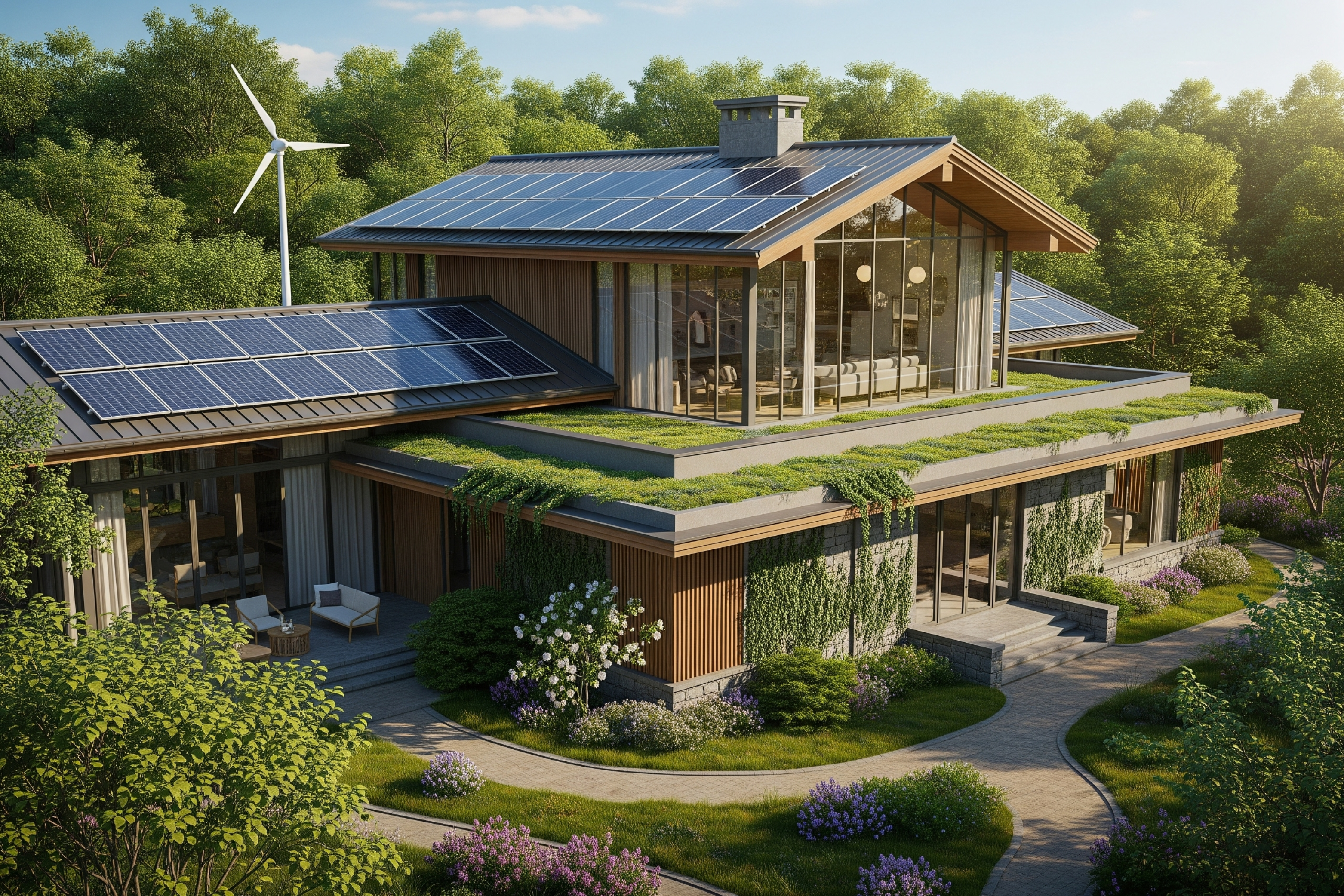
A modern villa renovated with eco-friendly materials, solar energy, and sustainable architecture.
Why Eco-Friendly Villa Renovation Matters
According to the International Energy Agency (IEA), buildings are responsible for nearly 30% of global energy consumption. A villa renovation is therefore a powerful opportunity to reduce your carbon footprint while improving living conditions.
Key benefits include:
Lower Energy Bills – Smart systems and solar panels reduce long-term utility costs.
Healthier Living Spaces – Natural materials and low-VOC paints improve indoor air quality.
Increased Property Value – A sustainably renovated villa is more attractive to buyers.
Future-Readiness – Meets growing demand for compliance with green building standards.
Expert-Recommended Eco-Friendly Renovation Ideas
1. Choose Sustainable Construction Materials
Architects and builders recommend bamboo, reclaimed wood, recycled steel, and cork for their strength and sustainability.
Use low-VOC paints and adhesives for better indoor air quality.
Consider locally sourced stone or tiles to cut down on transport emissions.
2. Improve Energy Efficiency with Smart Design
Install double or triple-glazed windows to prevent heat loss.
Use eco-friendly insulation such as cellulose, sheep’s wool, or recycled denim.
Add natural ventilation and skylights to reduce dependence on artificial lighting.
3. Adopt Renewable Energy Solutions
Solar panels to generate clean electricity.
Solar water heaters to replace energy-hungry systems.
In some regions, geothermal systems are an option for long-term savings.
According to U.S. Department of Energy, solar installations can reduce household energy bills by up to 70% annually.
4. Save Water Through Smart Systems
Install low-flow faucets, dual-flush toilets, and efficient showerheads.
Use rainwater harvesting for landscaping.
Drip irrigation for villa gardens reduces water waste by up to 50% compared to traditional sprinklers.
5. Integrate Smart Home Technology
Smart thermostats help control cooling and heating efficiently.
Motion sensor lighting ensures no energy is wasted.
Energy-monitoring apps track usage and suggest optimizations.
6. Eco-Friendly Interior Design
Invest in furniture made from reclaimed or recycled wood.
Use organic fabrics such as hemp or organic cotton for upholstery.
Incorporate indoor plants as natural air purifiers.
7. Waste Reduction During Renovation
Choose contractors who follow construction waste recycling practices.
Donate old furniture, doors, and fixtures instead of discarding them.
Modular construction methods help minimize waste.
Eco-friendly villa renovation isn’t just a design trend—it’s a responsible investment in the future. By embracing sustainable building practices, renewable energy, and smart technologies, you can enjoy a luxurious villa that’s energy-efficient, cost-effective, and environmentally conscious.
When choosing villa renovation services, always verify their green building certifications, past eco-projects, and waste management practices. A trustworthy contractor with sustainability experience will ensure your villa is both beautiful and environmentally responsible.
FAQ
- What is eco-friendly villa renovation?
- Eco-friendly villa renovation is the process of upgrading or remodeling a villa using sustainable materials, energy-efficient systems, water-saving fixtures, and green building practices to reduce environmental impact.
- How can I make my villa renovation eco-friendly?
- You can make your villa renovation eco-friendly by using bamboo or reclaimed wood, installing solar panels, improving insulation, adding rainwater harvesting, and integrating smart home technology.
- Is eco-friendly villa renovation more expensive than traditional renovation?
- Not always. While some green materials cost more upfront, eco-friendly renovations save money long-term through reduced energy, water, and maintenance costs.
- What are the best materials for sustainable villa renovation?
- Popular sustainable materials include bamboo, reclaimed wood, recycled steel, cork, natural stone, and low-VOC paints.
- Can older villas be renovated in an eco-friendly way?
Yes, older villas can be upgraded with energy-efficient windows, eco-friendly insulation, solar water heaters, and sustainable interiors.
- What are the benefits of eco-friendly villa renovation?
Benefits include lower energy bills, healthier indoor air, reduced environmental footprint, compliance with green standards, and higher property value.
- How much does eco-friendly villa renovation cost?
- Costs vary depending on location, villa size, and materials used. While initial investment may be 10–20% higher, long-term savings offset the expense.
- Does eco-friendly renovation increase villa resale value?
- You can make your villa renovation eco-friendly by using bamboo or reclaimed wood, installing solar panels, improving insulation, adding rainwater harvesting, and integrating smart home technology.
- What eco-friendly upgrades save the most energy in a villa?
- Solar panels, energy-efficient windows, eco-friendly insulation, and smart thermostats are the top energy-saving upgrades.
- How do I choose the right villa renovation contractor for a sustainable project?
- Look for contractors with green building certifications, proven experience in eco-friendly projects, and a clear waste management/recycling plan.